Types of kebab and what makes a real one
The smell of meat over coals is the signature of an Azerbaijani summer evening. But "kebab" is really a family of dozens of different dishes — each with its own cut of meat, its own preparation, its own fire. This article covers the varieties, what makes a proper kebab, and how to spot a good one in a restaurant.
A good kebab needs three things: quality meat, the right marinade and the heat of embers. The meat must cook over coals, not flame — flame scorches the outside and leaves the inside raw.
Where does kebab come from?
Threading meat onto a skewer and cooking it over fire is among humanity's oldest cooking methods. The word itself has Persian-Arabic roots, and versions of the dish are spread across a huge geography — from the Caucasus to the Middle East, from Central Asia to the Balkans.
In Azerbaijan, kebab merged with a nomadic heritage and an outdoor grilling culture to become a ritual in its own right: kebab is often made not at home but outdoors, together. Cutting the meat, preparing the marinade, waiting for the coals — all of it is part of the occasion.
The types of kebab
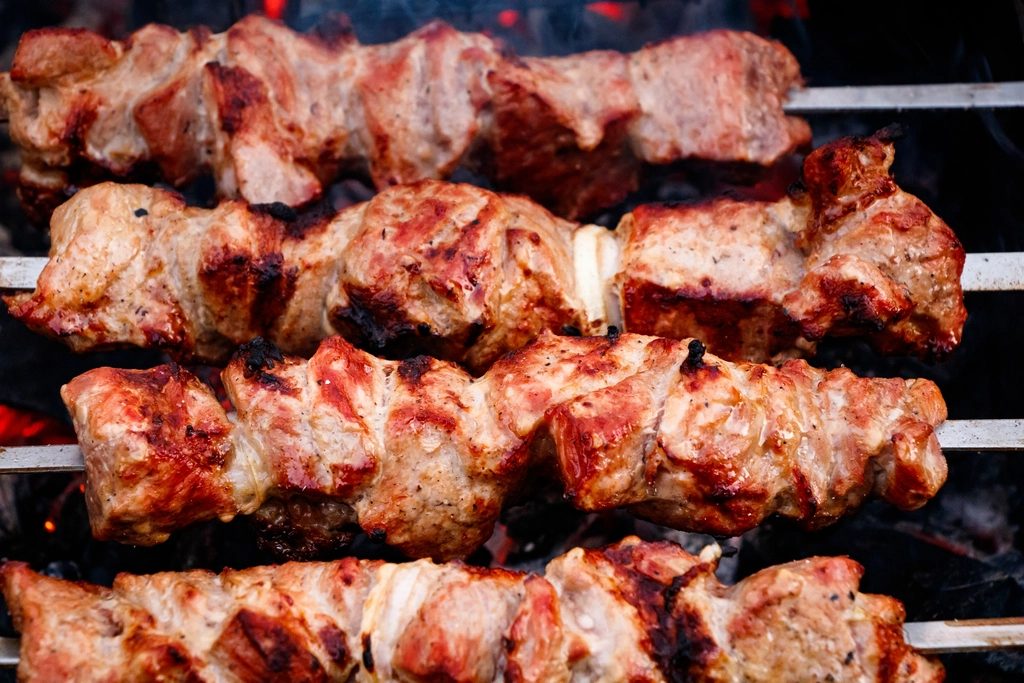
Tika kebab
The most classic version: whole chunks of lamb or beef threaded onto a skewer, with tail fat or onion between them. Meat quality cannot hide here — which makes tika kebab the best way to test a restaurant's grill.
Lula kebab
Made from minced meat, shaped onto the skewer by hand. Meat, onion, salt and pepper — nothing else. The sign of a good lula is that it does not fall off the skewer and does not leak when cut. By weight it is fattier than tika kebab.
Chicken kebab
From breast, thigh or wings. A saffron-and-yoghurt marinade is the most common version. The best fit for anyone looking for a lighter option.
Fish kebab
A classic of the Caspian region — sturgeon, kutum or other species. Because fish cooks quickly, time over the coals is the critical variable.
Vegetable kebab
Aubergine, pepper, tomato and onion, charred over coals and then peeled. Both a dish in its own right and the classic companion to meat kebab. An excellent option for vegetarians — more on that in our vegetarian and vegan guide.
Regional variations
There are dozens of regional versions: tail-fat kebab, liver kebab, sac kebab, stuffed kebab. Each region has its own ratios and its own marinade.
The varieties compared
| Type | Meat | Relative fat | Best for |
|---|---|---|---|
| Tika kebab | Lamb / beef, whole pieces | Medium | Tasting the quality of the meat |
| Lula kebab | Minced meat | High | Those who like a soft texture |
| Chicken kebab | Chicken | Low to medium | A lighter choice |
| Fish kebab | Fish | Low | Omega-3 |
| Vegetable kebab | — | Lowest | Vegetarians, or as a side |
What makes a proper kebab
1. The meat
Fresh, but rested. Meat straight from slaughter is not ideal for kebab. Breast and leg are preferred in lamb, the loin in beef.
2. The marinade
The classic Azerbaijani marinade is simple: onion, salt, black pepper — sometimes pomegranate juice or yoghurt. Vinegar-based marinades toughen the fibres and are often used to disguise poor-quality meat.
3. The coals
This is where most people go wrong. Flame must never touch the meat. You wait until the coals are covered in white ash; only then is the heat even. Skewers should be turned frequently so one side does not burn.
4. Resting
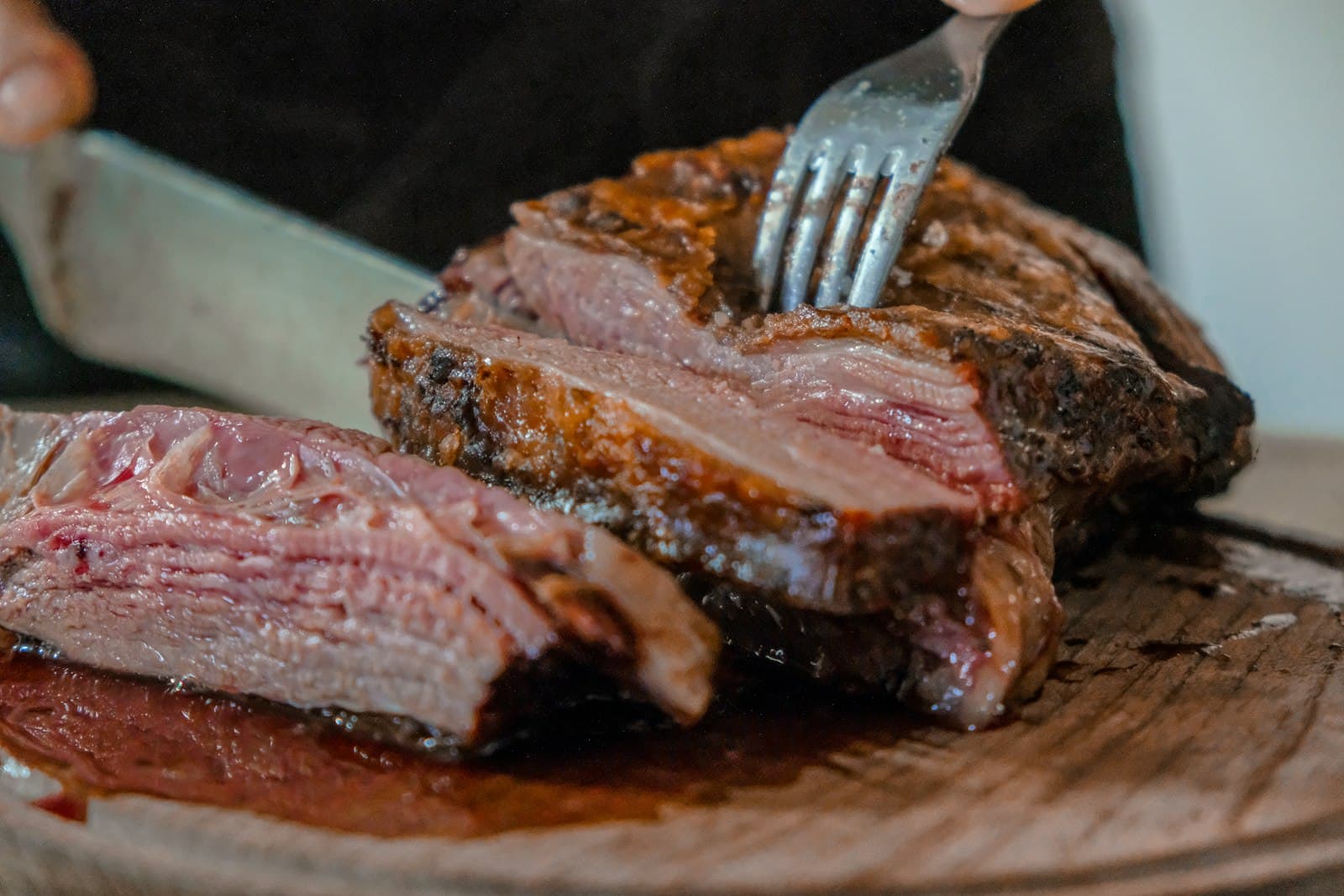
Kebab off the coals should sit for two or three minutes. Cut it immediately and the juices run onto the plate.
How to spot a good kebab in a restaurant
- Look at the cut. Evenly cooked meat that is not dry is a good sign.
- There should be no pool of fat. A lot of grease on the plate means the meat ratio was off.
- It should arrive with onion and herbs. This is not decoration — it aids digestion.
- The lavash should be warm. Cold bread suggests the dish was prepared in advance.
- Waiting time. If kebab arrives in five minutes, it was probably grilled earlier and held.
What is served alongside
- Chargrilled vegetables — aubergine, pepper, tomato.
- A plate of fresh herbs — basil, tarragon, coriander, parsley.
- Onion with sumac — the classic pairing that cuts the richness.
- Narsharab — tart pomegranate sauce, the traditional accompaniment to meat.
- Ayran or unsweetened tea.
Kebab is actually a healthy cooking method — excess fat drips away over the coals. The difference is in which type you order: tika or chicken kebab is lighter than lula, and a vegetable side beats chips. More in healthy choices at a restaurant.
Where to eat it
When choosing a place for kebab, look for an open grill — venues that let you watch the cooking are usually confident about their quality. You can check kebab house menus and prices on Harada Oturaq in advance. On other national dishes: Azerbaijani plov, the seafood guide.
Frequently asked questions
Tika kebab or lula kebab?
Tika kebab shows the quality of the meat itself and is relatively lighter. Lula gives a softer texture, but minced meat carries more fat. On a first visit to a restaurant, tika kebab is the better test of the kitchen.
Is kebab healthy?
As a cooking method, yes — excess fat drips off over the coals and no extra oil is used. It comes down to type and portion: chicken and tika are lighter, lula is fattier.
Should the marinade contain vinegar?
The traditional Azerbaijani marinade has none. Onion, salt and pepper are enough; pomegranate juice or yoghurt are also used. Vinegar toughens the fibres of the meat.
How many calories are in kebab?
It depends on the type. Per 100 grams, chicken kebab is roughly 150-180 calories, tika kebab 200-250, and lula kebab around 280-320. A portion is usually 200-300 grams.