Baklava, shakarbura and the guide to eastern sweets
Pakhlava, shakarbura and shakarchorayi, the decoration of every Novruz table, have for centuries been more than sweets — they are symbols. Each shape carries a meaning, and each takes its own kind of patience to make. This article covers the varieties, what separates them, and where to eat them.
Azerbaijani pakhlava is cut into diamonds and finished with walnuts and a saffron syrup. It differs from the Turkish version in having fewer pastry layers and a thicker nut filling — the result is softer and less syrupy.
The three sweets of the Novruz table
Pakhlava — the symbol of the sun
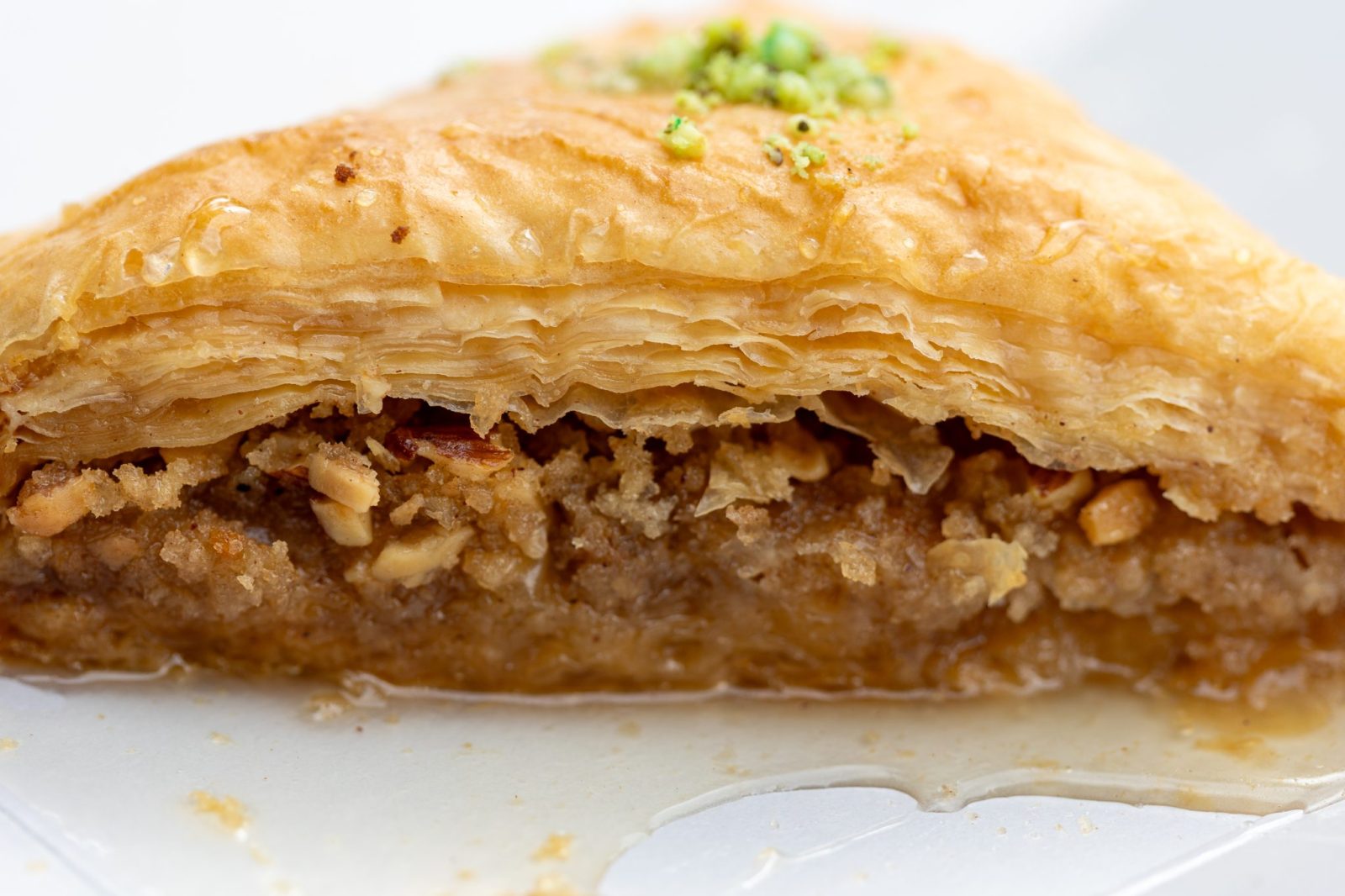
The diamond cut and the walnut set on top represent the sun. Thin sheets of pastry, a walnut and hazelnut mixture between them, melted butter and saffron syrup poured over.
The mark of real pakhlava: the layers should be visible individually in the cut. If they have fused into a mass, either the pastry was rolled too thick or too much syrup was used.
Shakarbura — the symbol of the moon
Folded into a crescent and patterned with a tool called a maggash. The filling is ground hazelnut or walnut, sugar and cardamom. Unlike pakhlava, the dough is soft and made with milk.
The patterning is the most time-consuming part of preparing for Novruz — the women of the family sit together and work at it for hours. The beauty of the pattern is considered the household's signature.
Shakarchorayi — the symbol of the star
Round, soft, simple. Butter, flour, icing sugar and saffron. The quickest to make, and the quickest to disappear.
Other eastern sweets
| Sweet | What it is | Character |
|---|---|---|
| Shakarbura | Soft pastry + hazelnut filling | Soft, little syrup |
| Pakhlava | Thin layers + walnut + syrup | Sweet, dense |
| Shor gogal | Savoury spiced layered pastry | Not sweet — salty |
| Mutaki | Rolled, with walnuts | Crisp |
| Gurabiya | Rich, crumbling dough | Dry, good with tea |
| Sheki halva | Rishta strands + walnut + syrup | Very sweet, special technique |
| Firni, suddash | Milk-based | Light dessert |
Why Sheki halva stands apart
Sheki halva is made by an entirely different technique: fine rishta strands are poured through a special mould and layered, with walnut and saffron syrup between the layers. Making it takes real skill, and the craft is traditionally passed down through generations.
How to recognise good pakhlava
- Look at the cut. You should be able to count the layers.
- Syrup level. A pool of syrup left on the plate means too much was used and the pastry is heavy.
- The colour and smell of the nuts. Stale walnuts taste bitter — the most common fault in pakhlava.
- Saffron. Artificial dye gives an even colour; saffron leaves streaks and an aroma.
- Freshness. Pakhlava keeps for three or four days; after that the layers soften.
The sugar question
Let us be honest: these sweets are heavy in sugar and fat. A single piece of pakhlava can be roughly 150-250 calories and the equivalent of three to five teaspoons of sugar.
That is not a reason to give them up. Novruz comes once a year, and ceremonial food has its own place. The issue is only when such sweets become an everyday habit.
Take one piece, drink unsweetened tea with it, and share. Home-made is usually better than industrial — no preservatives and no shelf-life fats. For the daily sugar arithmetic: the harms of sugar.
Where to try them
Look for eastern sweets in two places: traditional teahouses (the classic pairing with tea) and specialist confectioners. The dessert section of a national-cuisine restaurant will usually also carry pakhlava and shakarbura.
How they are served as part of the tea ritual is covered in tea culture and teahouses. You can check restaurant dessert menus on Harada Oturaq in advance.
Frequently asked questions
What is the difference between Azerbaijani and Turkish baklava?
Azerbaijani pakhlava has fewer pastry layers and a thicker nut layer; it is cut into diamonds and finished with saffron syrup. Turkish baklava has more and thinner layers, uses pistachio widely, and carries considerably more syrup.
Are shakarbura and pakhlava made from the same dough?
No. Pakhlava dough is rolled thin and layered; shakarbura uses a soft dough made with milk and butter.
Is shor gogal a sweet?
No — although it appears on the Novruz table, shor gogal is savoury and spiced. The filling contains fennel, caraway, sumac and salt. It is eaten with tea.
How long do these keep?
Pakhlava three to four days; shakarbura and shakarchorayi up to a week, in a dry cool place. Refrigerating hardens the pastry, so it is not recommended.